



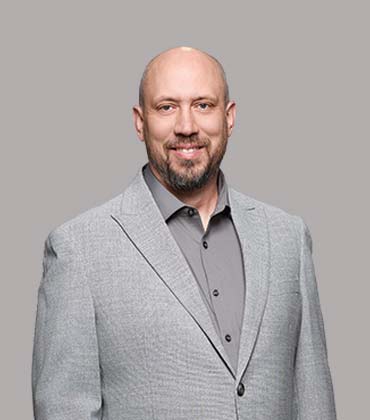
 Grant Dakin, President
For SolidTech, the real product is calm. Through its management of networks, security and cloud systems, it aims to create fewer surprises and greater confidence by making recovery known, owned and rehearsed.
“Reliable IT is IT you can prove, not IT you hope about,” says Grant Dakin, president. “Our whole promise is that a client's team can feel calm, confident and happy with their technology.”
That reliability rests on three things clients can demonstrate when asked: uptime, recoverability and data integrity. Systems should be available when clinicians need them, restores should be tested rather than assumed, and information should remain intact and trustworthy at the point of care.
Replacing Heroics with a System
SolidTech calls ownership, cadence and verification the three levers of predictable IT. Each engagement begins by listening to how staff actually work, so technology fits the clinic rather than forcing the clinic to work around technology.
Designated individuals are accountable for onboarding and offboarding, patching, backups and vendor access. Weekly support keeps small issues from stacking up, monthly reviews check fundamentals and quarterly leadership meetings address risk, priorities, roadmap and budget. Results are verified rather than assumed, replacing “we think” with “we can show you.”
-
Reliable IT is IT you can prove, not IT you hope about.
The same philosophy shapes its Quality Improvement in five steps (5QI) process. Evidence Check establishes what is working and what is not. Reality Review connects findings to business conditions. Decision Points bring leadership choices into focus. Execution Cycle removes blockers and verifies completion, while Budget Map creates a multi-year view of costs and renewals. Together, these steps create a living roadmap where improvement happens on cadence rather than urgency.
Proof Instead of Assumption
SolidTech distinguishes between owning a tool and proving that a control works. MFA must be enforced, backups proven through restore tests and incident plans understood before a crisis. Monitoring also covers the after-hours window when threats may move, while staff are encouraged to verify unusual requests through a second channel.
That principle extends to Alberta HIA obligations. SolidTech works within Alberta’s regulatory environment, helping its guidance fit local healthcare realities rather than a generic template.
Compliance evidence is produced through normal IT management rather than assembled only when an audit arrives. Additional verification is introduced only at higher-risk moments involving money or sensitive health information. SolidTech assigns an owner for privacy responsibilities, preventing accountability from becoming diffuse.
Clients receive a compact proof pack that can quickly answer “show me” questions, such as when the last restore was tested or whether MFA is enforced. Confidence is also tracked through retention, renewals, referrals, CSAT feedback and quarterly-reviews.
The result matters to patient care indirectly but meaningfully. Reliable systems give clinicians and staff their time, trustworthy information and focus back. They also reduce the steady drain caused by recurring technology surprises, helping create a calmer environment without overstating IT’s role in clinical outcomes. That is peace of mind in practice.
Governing Technology Before It Governs the Clinic
SolidTech applies the same discipline to AI. It recognizes immediate value in drafting, summarization and administrative work while guarding against shadow AI, excessive permissions, phishing and voice cloning. Approved tools, cleaner permissions and a verification culture help keep useful technology from becoming unmanaged risk.
Everything returns to three words: Listen, Help, Protect. SolidTech’s recognition as the Top Healthcare IT Consulting Firm in Canada 2026 reflects its ability to turn technology from a source of uncertainty into a managed discipline that clients can see, test and trust.
